
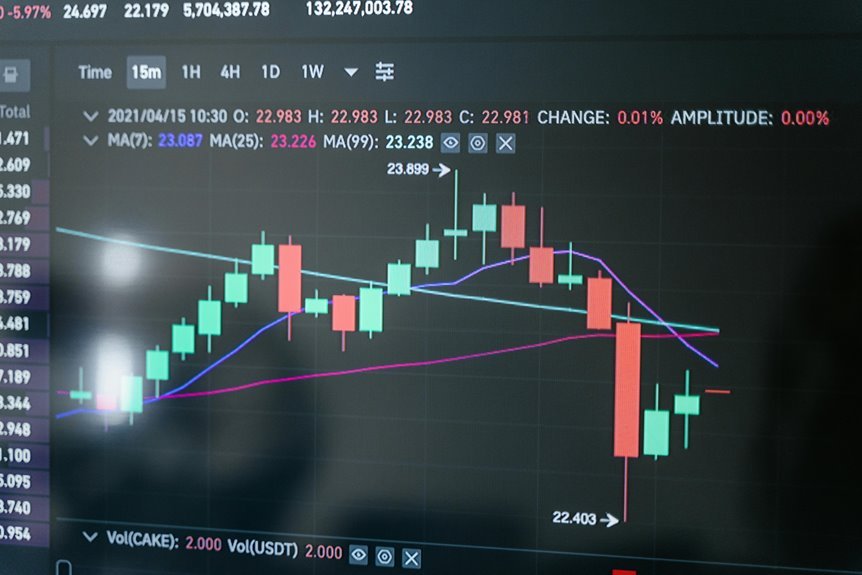
When the market crashes, investors often face significant stress and uncertainty. It becomes crucial to assess one’s investment portfolio to ensure alignment with individual risk tolerance and financial goals. Diversification plays a key role in mitigating potential losses. However, understanding how to navigate these turbulent times requires more than just a quick fix. There are deeper strategies and insights that can influence future decisions and outcomes. What should investors consider next?
Assess Your Investment Portfolio
In times of market volatility, a thorough assessment of one’s investment portfolio becomes imperative.
Investors must evaluate their risk tolerance, ensuring alignment with current market conditions and personal financial goals.
Portfolio diversification is essential to mitigate potential losses, distributing investments across various asset classes.
This strategic approach enables individuals to maintain control over their financial futures, fostering a sense of freedom amidst uncertainty.
Stay Informed and Educated
How can investors navigate the complexities of a market crash without falling victim to panic? Staying informed about market trends and enhancing financial literacy are crucial.
Knowledge empowers investors to make rational decisions rather than emotional ones. Regularly reviewing reliable financial news and educational resources allows for a deeper understanding of market dynamics, ultimately fostering resilience and informed decision-making in turbulent times.
Consider Long-Term Strategies
Investors facing a market crash should pivot their focus toward long-term strategies that promote stability and growth.
By embracing diversification benefits, investors can effectively spread risk across various asset classes, aligning with their individual risk tolerance.
This approach not only mitigates potential losses during downturns but also positions portfolios for recovery and expansion, ultimately fostering greater financial freedom in uncertain economic climates.
Conclusion
In times of market turmoil, maintaining composure is crucial. As the adage goes, “calm seas never made a skilled sailor.” Investors should regularly assess their portfolios, ensuring alignment with risk tolerance and long-term goals. Staying informed enhances decision-making, while a focus on diversification can cushion against losses. By adopting a long-term perspective and cultivating emotional resilience, individuals can navigate market uncertainties more effectively, positioning themselves for eventual recovery and growth in their investments.